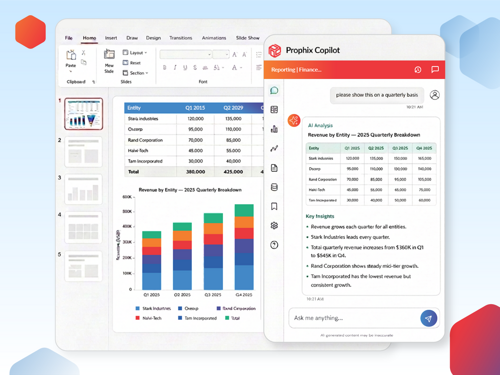
A healthy month-end close is predictable and efficient, benefiting from standardized workflows, clear review and sign-off tasks, and automated matching and reconciliation. However, closes that rely on manual processes lose transparency, accuracy, and efficiency, thanks in part to fragmented data scattered across emails, spreadsheets, and different ERPs.
In this guide, we explore best practices that support more accurate, transparent, and manageable month-end closes, building toward a more consistent, efficient, repeatable process.
What the Month-End Close Process Actually Involves
The month-end financial close is a series of activities that finance and accounting teams complete to finalize an accurate monthly record of financial performance. This involves reconciling accounts, maintaining audit trails, and producing financial statements that feed into management reporting and forecasting.
Month-end close timelines vary by company size, complexity, and demand, with most businesses taking around a week or more to complete them. Major stages include:
- Pre-closing (covering accruals, collection of data, and initial pre-close meetings to ensure buy-in and transparency)
- Reconciliation (gathering transaction, payment, and invoicing data to confirm accounts and bank finances are fully matched)
- Review and approval (analyzing variance in records, addressing journal entries for completeness, accuracy, and anomalies)
- Reporting (developing financial statements and preparing management packs for distribution)
When working with multiple data sources, these steps become complex to manage, especially for companies that are reliant on manual processes.
One answer is to embrace greater data visibility - by consolidating vital close data that would otherwise sit fragmented across different sub-ledgers, documents, and ERP modules. For example, some of the most efficient accounting and finance teams use platforms that consolidate data into a single, reconciled view that everyone working on the close can see.
Prophix One Financial Close Management addresses this directly — consolidating large, fragmented datasets into a single source of truth so finance teams can close faster, give leadership the accurate reporting they need to make confident decisions, and walk into every audit with complete, defensible records.
Month-End Close Challenges
Month-end closes break down due to process gaps and coordination failures. These can include insufficient review checkpoints, unclear task ownership, or systems that are not designed to handle close demands. All of which can be addressed with the right process design, standardization, and technology choices.
The following signs indicate that a close has common, but fixable, structural issues:
- Reconciliations are reactive, not proactive, being made in response to deadline pressures rather than being embedded into a continuous flow. It is the difference between catching up instead of recording and matching data as it is generated.
- There’s no documented close checklist or review process, meaning tasks occur as and when necessary. This leads to reduced transparency, unclear ownership, and bottlenecks.
- Close tasks are spread across disconnected systems with no single source of truth, creating version control confusion, duplicated effort, and an increased risk of errors.
- Journal entries pass the close without review or approval, leaving errors to go undetected.
- There are no retrospectives or post-close reviews in place, meaning there are few opportunities for finance and accounting teams to address feedback and improve future closes.
In addition, over-reliance on manual accounting methods increases the risk of data entry errors, low visibility, and version conflicts.
Even with clear ownership of the close, limited visibility into task progress and potential bottlenecks forces finance and accounting teams to rely on manual check-ins and emails. This slows the close and allows issues to surface late in the process.
However, there are best practices that help accelerate the month-end close while keeping reports accurate. These involve moving away from static close reconciliations toward rolling, templated, repeatable actions that are transparent and scalable.
Best Practices That Accelerate the Month-End Close
To avoid common close challenges, finance and accounting teams must move away from reactive processes toward a more continuous, consistent, and structured process. Following best practices helps build a predictable, reliable system that boosts close efficiency, enables real-time forecasting and strategy building, and reduces manual error risks.
Establishing pre-close discipline
Pre-close discipline gives finance and accounting teams dedicated time to review how the most recent close ran, address carry-over issues, and close gaps before the next cycle begins. Without it, those reflection points get lost to deadline pressure, and the same problems repeat.
A healthy approach to pre-close discipline involves running open meetings before the end of a designated month, ideally a couple of days before the final close. During these meetings, personnel and managers review exceptions from prior months, sign off on data sources, and assign personnel to future tasks.
This allows finance and accounting teams to continuously improve and enhance close performance, carefully verify that tasks are completed within expectations, and that everyone involved understands their responsibilities.
With the support of Prophix One Financial Close Management, data integration ensures that all silos and systems are accounted for, with cross-department communication benefiting from hundreds of supported platforms. The result is a reliable, repeatable close process that’s meticulously verified by everyone involved.
Running a “living close” checklist
Manual and/or unclear process roadmaps result in late deadline challenges, extended close cycles, and inaccuracy risks. The same applies when running a static, unedited checklist despite process gaps and system inefficiencies emerging.
Instead, a “living close” checklist should be a transparent, accessible document that updates with every monthly closing process. It should clarify:
- What specific tasks need to be completed
- Who owns which tasks
- When tasks are due to be completed
- What “done” or “completed” means in practice
Living close checklists bring structure to the process, clarifying task ownership, sequencing work in the right order, and ensuring all work is completed to the business’s satisfaction, and by the deadlines set.
Prophix One Account Reconciliation supports built-in, flexible checklists and real-time visibility into automated matching, keeping everyone on the same page as the close evolves, and ensuring that future closes remain consistent.
If you’d like a preview, our month-end close checklist explores a few recommended activities you can adjust while using the platform.
Reconciling continuously
Reconciliations made under deadline pressure, and/or those tied to manual processes, lead to cycle extensions and slowdowns. Finance and accounting teams may need to open investigations to source data, liaise with different departments, and rush verifications to meet a close deadline.
Adopting a continuous reconciliation process — keeping accounts payable, receivable, and connected bank accounts matched and verified in real time — reduces end-of-close bottlenecks and gives finance teams more time for final verifications and reflection.
Prophix One Account Reconciliation supports automated high-volume transaction matching within finance-set parameters, and with exceptions raised for expert analysis. Finance keeps total control and can adjust how automation performs as their close needs evolve, while ensuring manual tasks are continuously delegated.
Automating reconciliations and other high-volume tasks frees finance and accounting teams to focus on higher-value work — analysis, judgment calls, and the strategic activities that actually move the business forward.
The final days of the close become more streamlined and predictable — creating space for the strategic review and decision-making that close data is ultimately meant to support.
Standardizing journal entry controls
Journal entry control is foundational to close accuracy, audit readiness, and regulatory compliance. When templates and approval workflows are absent, there is no single source of truth for entries moving through the close — errors go undetected, information fragments across spreadsheets and manual records, and reconciliation and review stages absorb time that should be spent on finalization and analysis.
A documented, fully transparent approval workflow ensures all entries pass through the right reviewers before posting — improving accuracy, reducing post-close adjustments, and creating a clear audit trail that supports compliance and simplifies any external review.
Prophix One Account Reconciliation's built-in workflows provide complete oversight of journal entry progression, ensuring no entries post to the close without clear approvals — and that every decision is traceable when it matters most.
Running post-close retrospectives
The end of a close offers an opportunity for finance and accounting personnel to address what went right and wrong, and where improvements are possible. However, scheduling time for reflection is challenging under deadline pressures.
But running post-close retrospectives doesn’t have to be complex or time-consuming. For example, consider scheduling 30-60 minute meetings to briefly review the monthly close, to delegate future tasks, and to share feedback openly to improve cycle efficiency and system effectiveness.
Doing so shortens close cycles over time,and boosts departmental performance. And, with comprehensive financial data sourced, aggregated, and centralized via Prophix One, detailed performance reviews are fast and efficient.
Automating the collection and centralization of this data improves the accuracy and reliability of analyses, and gives finance teams the capacity to focus on interpretation rather than data gathering.
How Automation Raises the Bar on the Month-End Close Process
Automation gives finance and accounting teams the one thing manual processes cannot — time. By handling high-volume, repetitive close tasks — transaction matching, data aggregation, approval routing — automation frees the team to focus on exception review, variance analysis, and the strategic work that actually drives business decisions. The close becomes faster, more consistent, and easier to audit.
Automation delivers measurable improvements across every stage of the close:
- Reconciliation time drops — transactions are matched as they arrive, supporting a rolling close and eliminating end-of-period pile-ups
- Leadership has live close visibility — real-time dashboards show status by entity, removing the need for daily status calls and manual progress updates
- Journal entry reviews stay consistent — standardized approval workflows ensure every entry is documented and auditable before it posts
- The close improves over time — reliable performance analytics surface bottlenecks and give teams the insight to run each cycle better than the last
Prophix One is built around this model — a single application for task management, account reconciliation, transaction matching, workflow standardization, and audit trails. Finance and accounting teams own the entire close process in one place, with full visibility, clear accountability, and the documentation needed to support any internal or external review
The result is a more efficient and accurate close, and extra time and freedom for finance teams to focus on analysis and strategy building, away from manual data processing.
With Prophix One, for example, Jamul Casino drastically cut month-end processing time, resulting in extensive labor efficiency savings. The organization reduced its typical month-end close time from 10 to seven days, shaving more than $15,000 off close labor costs.
As part of your month-end close improvement strategy, consider the difference that a centralized, transparent platform like Prophix One makes. See what your close could look like with our demo and reach out to our team to learn more.
Sources
10-Step Month-End Close Checklist & Best Practices. (2024). In Prophix. Retrieved March 11, 2026, from https://www.prophix.com/blog/10-step-month-end-close-checklist-best-practices
A complete month-end close process for FP&A teams. (2025). In Prophix. Retrieved March 11, 2026, from https://www.prophix.com/blog/a-complete-month-end-close-process-for-fp-a-teams
Demo. (n.d.). In Prophix. Retrieved March 11, 2026, from https://www.prophix.com/demo
Financial Close Software. (n.d.). In Prophix. Retrieved March 11, 2026, from https://www.prophix.com/use-case/financial-close
How to achieve a strategic financial close. (2025). In Prophix. Retrieved March 11, 2026, from https://www.prophix.com/blog/financial-close-process-account-reconciliation-consolidation
Top financial close challenges and how to solve them. (2024). In Prophix. Retrieved March 11, 2026, from https://www.prophix.com/blog/top-financial-close-challenges-and-how-to-solve-them
Winning the budgeting jackpot for Jamul Casino. (n.d.). In Prophix. Retrieved March 11, 2026, from https://www.prophix.com/customer-stories/winning-the-budgeting-jackpot-for-jamul-casino